 Terroir & Table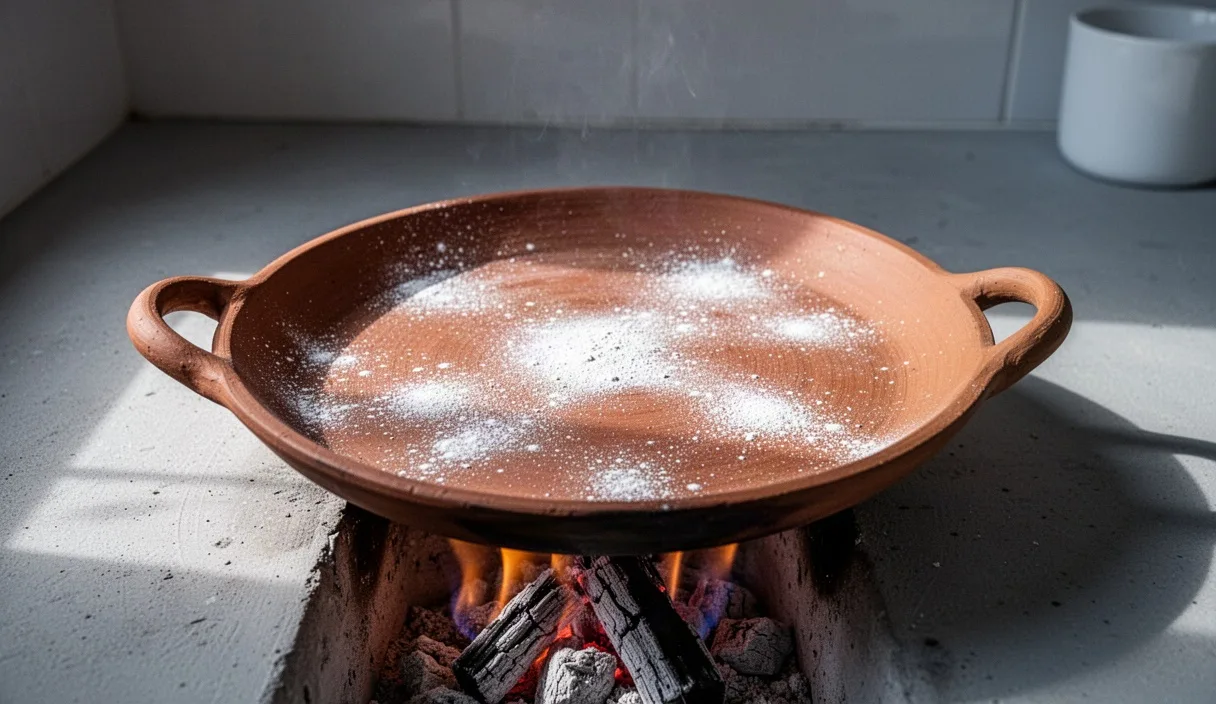

The unglazed clay comal, known regionally as the comal de barro, occupies a quiet center in the traditional kitchens of Oaxaca. Crafted by hand from local alluvial clays, often blended with fine river sand to moderate thermal expansion, this ancient vessel mediates fire with an extraordinary gentleness. Unlike modern steel or heavy cast iron, earthen ware does not sear with aggressive conductivity; rather, it accumulates heat steadily and releases it via radiant emission, creating the precise micro-climate necessary to puff fresh corn masa without charring its delicate outer skin.
For the cook working beyond the wood hearths of the Central Valleys, introducing an unglazed Oaxacan comal to a domestic gas range demands deliberate adjustment. Raw earth is sensitive to localized thermal shocks, moisture fluctuations, and mechanical stress. Successful mastery of the vessel rests not upon intuitive guesswork, but upon traditional curing methods using calcium hydroxide, coupled with an orderly protocol for heating and maintenance. The following guide outlines the principles of material, curing, and heat regulation essential for long-standing service.
Properties of Unglazed Barro Tortilla Plates
The clay employed in Oaxacan cookware, principally from regions such as San Marcos Tlapazola, is fundamentally open-pored earthenware. Fired in low-temperature pit kilns generally between 700 and 850 degrees Celsius, the clay particles do not fully vitrify. This partial vitrification preserves microscopic cavities throughout the cross-section of the comal. These pores serve as natural shock absorbers against thermal movement, while permitting trace amounts of moisture to migrate inward and dissipate safely into the atmosphere.
The primary advantage of this open porosity is its thermodynamic profile. Unglazed clay features low thermal conductivity paired with high emissivity. When metal is placed over an open burner, it forms intense hot spots directly above the flame jets. Barro, by contrast, absorbs this energetic input, diffuses it laterally across the plate thickness, and transmits a soft, pervasive warmth. This radiant energy penetrates deep into fresh masa, gelatinizing starches evenly before the exterior can dry into a brittle crust.
However, this structural virtue also introduces material vulnerabilities. Because the vessel is chemically unglazed, it easily absorbs ambient fats, mineral-laden waters, and synthetic detergents. Liquid grease drawn into open clay pores will turn rancid over time and produce smoke upon heating. Therefore, cooks must treat the vessel as a semi-permeable stone requiring an inert surface barrier, which is achieved through the traditional application of slaked lime.
| Material | Conductivity Rate | Thermal Retention | Primary Risk Factor |
|---|---|---|---|
| Low-fire Barro (Clay) | Low (approx. 0.8 to 1.2 W/mK) | Moderate to High | Thermal and Mechanical Shock |
| Seasoned Cast Iron | Moderate (approx. 50 W/mK) | Very High | Rapid Surface Charring |
| Rolled Carbon Steel | High (approx. 54 W/mK) | Low to Moderate | Warping over Direct Heat |
Preparing the Slaked Lime Solution
The curing agent for an unglazed comal is not fat, as one might use for iron, but calcium hydroxide, known colloquially as food-grade slaked lime or cal. Applying animal grease or plant oil directly to porous clay results in burning, pungent odors, and poor non-stick properties. A saturated calcium hydroxide wash, conversely, binds with the surface minerals, fills the microscopic crevices, and calcifies into an inert, smooth barrier that masa will release from cleanly.
To prepare the treatment, acquire food-grade calcium hydroxide from an established purveyor of nixtamalization supplies. Avoid industrial construction limes, as they frequently carry undesirable heavy metals or unrefined additives. In a clean non-reactive vessel, combine approximately 40 grams of slaked lime powder with 240 milliliters of tepid water. Whisk the mixture thoroughly. The powder will not dissolve entirely; it forms an opaque white suspension resembling thin cream.
The concentration of this suspension must be managed carefully. If the mixture is too thin, it will fail to leave an adequate deposit within the clay pores, requiring multiple unnecessary baking cycles. If mixed too thick, resembling plaster, it will dry into an unstable crust that flakes off into your dough during cooking. The correct consistency will coat the back of a wooden spoon lightly, leaving a translucent, chalk-white film when drained.
The Initial Curing Bake
Before introducing heat, examine the comal for surface dust from transit. Wipe the clay gently with a clean, slightly damp cotton cloth. Do not soak the piece in water; clay saturated with deep liquid water is prone to cracking when placed over an active flame. Allow the piece to sit for one hour until completely surface-dry before proceeding to the seasoning fire.
To cure the comal, follow this systematic procedure:
- Place a heavy-gauge heat diffuser over the domestic gas burner to prevent the flames from contacting the bare clay directly.
- Set the comal centered upon the diffuser. Turn the burner to the lowest possible flame setting and allow the clay to warm gradually for 20 minutes.
- Once the comal feels distinctly warm to the touch, approximately 60 degrees Celsius, dip a clean pastry brush or a folded cotton rag into your agitated lime wash.
- Apply a uniform, thin coat of the lime liquid across the entire cooking basin, extending up the shallow interior rim. The liquid will sizzle softly and dry quickly upon contact with the warm clay.
- Allow this first layer to bake into the surface for 10 minutes until the moisture evaporates, leaving a pale, matte coating.
- Apply a second thin coat over any bare or thin patches, brushing across the grain of the previous strokes to ensure total micro-pore coverage.
- Increase the flame slightly to a low-medium intensity, allowing the comal to bake undisturbed for 35 to 45 minutes until the wash turns chalk-white, hard, and powdery to a dry touch.
Turn off the burner and permit the comal to cool down entirely in place. Do not move the vessel while hot, and never place it on a cool stone countertop to hasten the drop in temperature. Once cold, brush off any loose, powdery surface calcium with a dry linen cloth. The remaining white layer is now bonded to the clay matrix, establishing a naturally slick surface ready for masa.
Managing Heat Zones on Domestic Burners
Traditional wood fires distribute heat across a broad earthen hearth, whereas modern residential gas burners discharge concentrated cones of heat. Placing a round, convex Oaxacan comal directly onto a small burner creates a severe temperature disparity between the glowing center and the cooler outer rim. This differential produces thermal stress that can snap unglazed earthenware cleanly along its midline.
A cast-iron or heavy steel heat diffuser disk is practically required on domestic ranges. The diffuser accepts the harsh flame rings, collects the thermal energy, and radiates it across a wider footprint beneath the clay plate. When installing the vessel, verify that it sits level and does not wobble on the burner grates; uneven balance induces physical torsion as the clay expands under warmth.
Managing heat zones across the cooking surface requires patience and an understanding of the vessel's thermal inertia:
- The Center Anchor: The central circle of the comal directly over the burner will maintain the highest heat, typically ranging between 220 and 240 degrees Celsius. This region is reserved for the second turn of a tortilla, where maximum heat is required to convert trapped water into steam and generate the characteristic ballooning puff.
- The Outer Rim: The periphery of the comal settles between 160 and 180 degrees Celsius. Use this zone for the initial setting of raw masa, often called the first turn, which lasts 15 to 20 seconds. This gentler temperature forms a thin skin on the bottom of the dough without sticking or scorching, preparing it for the hotter center.
- The Resting Perimeter: The uppermost edges of a flared comal, which receive minimal direct conductive heat, are suited for resting finished tortillas briefly under a cloth to keep them warm while adjacent dough discs cook.
Adjust temperatures gradually. If the cooking surface is too cool, increase the gas output by a modest increment and wait a full four to five minutes for the barro to register the change. Never turn a burner to high in an effort to accelerate preheating, as rapid thermal gradients are the single greatest cause of sudden clay failure.
Routine Cleansing Without Detergents
An unglazed comal must never come into contact with commercial dish detergents, degreasers, or machine dishwashers. The porous matrix acts like a dense sponge; synthetic surfactants will penetrate deeply into the earthenware, rendering it impossible to rinse clean. Subsequent uses will heat those trapped compounds, volatilizing chemical odors directly into your food.
For daily maintenance following a cooking session, let the vessel rest on the range until it matches room temperature. Using a dry stiff-bristle natural brush or a brass wire brush, gently sweep away any loose toasted flour, charred bits of masa, or loose lime dust. In most instances, a dry brush and a wipe with a clean, dry tea towel provide sufficient care.
When cooking releases stubborn masa residues that cling to the plate, employ a damp salt scrub. Sprinkle two tablespoons of coarse sea salt over the cooled comal. Using a folded cotton cloth moistened with a few drops of warm water, scour the salt across the affected spots. The salt acts as an abrasive that shears away cooked starch without scratching into the clay substrate. Wipe away the salt grains with a slightly damp cloth, then immediately dry the surface thoroughly with a towel. If the white lime coating wears thin over months of scraping, simply reapply a single coat of slaked lime wash following the baking procedure outlined previously.
Preventing Structural Stress Fractures
Earthenware pieces are held together by interlocked mineral bonds formed during low-fire pit kilns. These bonds are rigid; they possess negligible tensile elasticity. Structural fractures occur when one section of the plate expands or contracts at a rate dramatically different from an adjacent section. Preventing fractures requires strict adherence to three mechanical rules: gradual temperature transitions, continuous moisture balance, and delicate physical handling.
Thermal shock is the most frequent agent of destruction. Never set a hot comal under a running faucet, and never place chilled food directly onto its surface. If you are warming refrigerated tortillas rather than freshly pressed masa, allow the tortillas to sit on the counter for 15 minutes to lose their chill before laying them onto the hot clay. Likewise, avoid drafts; do not position high-velocity cooling fans or air conditioners to blow across an operating comal, as uneven surface cooling can trigger a hairline split across the base.
Moisture control is equally vital for longevity. Store the comal in an open, dry cupboard where air circulates freely. Storing unglazed clay inside closed, humid environments can foster mildew within the interior pores. If the comal absorbs ambient dampness over an extended period of disuse, heat it with extraordinary caution: run a very low flame beneath a diffuser for 30 minutes to drive out deep moisture before raising the temperature to standard cooking levels. Rapidly boiling trapped interstitial water can fracture the clay body from within.
Common Mistakes
Even seasoned home cooks occasionally misuse unglazed barro by importing techniques meant for seasoned metals. Observing the following precautions will protect both the comal and your culinary results:
- Applying Vegetable Oil to Season: Seasoning an unglazed comal with cooking oils creates a sticky, smoking surface that spoils the neutral flavor required for corn tortillas. Slaked lime must be the exclusive curing agent.
- Skipping the Heat Diffuser: Placing the comal directly on narrow, concentrated gas flame rings creates severe local hot spots that inevitably generate stress fractures over time.
- Washing While Warm: Exposing clay to cool water before it has fully cooled to ambient room temperature causes catastrophic thermal shock, often splitting the piece in two.
- Over-soaking in Water: Submerging unglazed earthenware saturates its pores, making subsequent heating dangerous because trapped water converts to expanding steam inside the clay walls.
- Aggressive Scraping with Metal Tools: Using sharp steel spatulas or scrapers cuts through the protective lime barrier and gouges the soft fired clay beneath.
Practical Next Steps
Integrating an unglazed Oaxacan comal into your kitchen rewards patience and careful attention to traditional method. To begin, source a food-grade calcium hydroxide powder and a solid cast-iron heat diffuser that matches the diameter of your burner. Inspect your new comal carefully under good light, checking for any shipping fractures or significant structural fissures before exposing it to any heat source.
Begin with the initial cleaning and gentle warm-up described above, applying the lime wash in thin, successive layers until you achieve a durable, chalk-white surface. Dedicate your first few sessions entirely to cooking plain corn tortillas made from freshly nixtamalized masa, which allows you to calibrate the burner output, learn the specific hot zones of your cooktop setup, and build confidence in managing this ancient and responsive hearth tool.