 Terroir & Table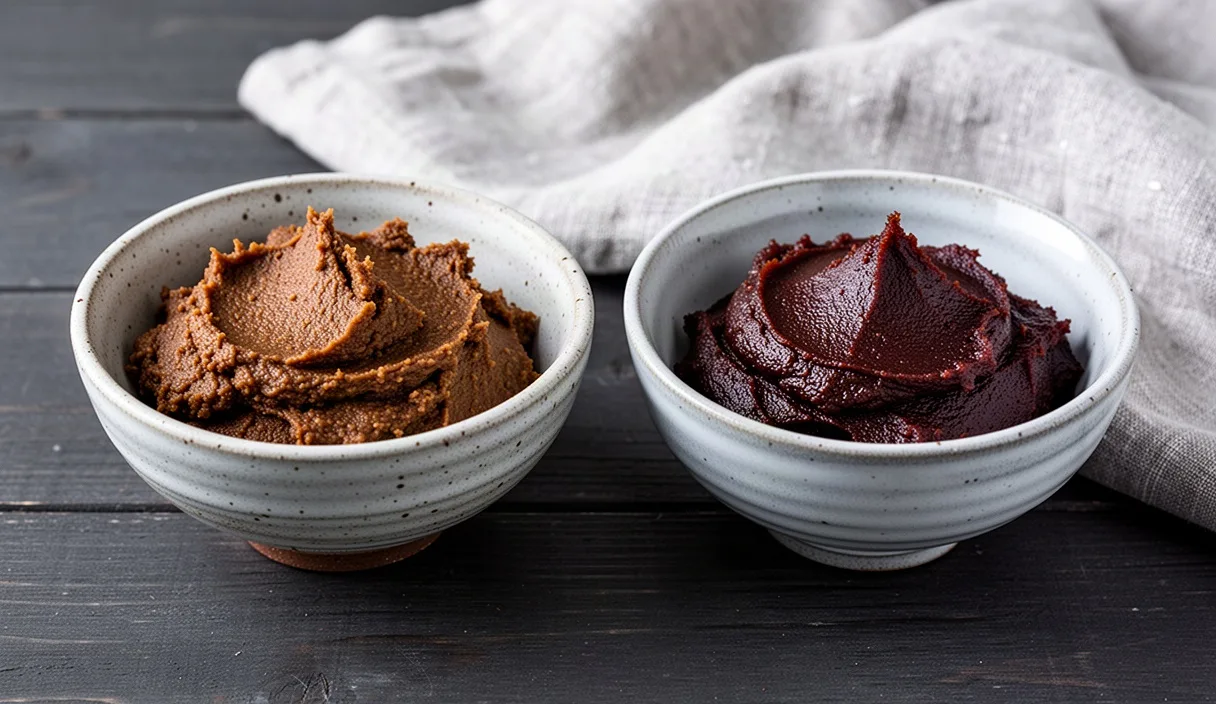

Fermented soybean pastes serve as foundational seasoning bases across Northeast Asia, anchoring culinary traditions that date back over two millennia. While both Korean doenjang and Japanese aka miso (red miso) rely on the transformative power of microbial proteolysis to convert firm, bitter legumes into savory pastes, their respective production methods diverge fundamentally. This divergence yields seasoning agents that behave quite differently when exposed to heat, salt, and dilution. For the cook seeking precision at the stove, treating these two pastes as interchangeable components obscures their distinct physical and aromatic properties.
A rigorous examination of doenjang and red miso reveals marked contrasts in microbiology, salinity, particle size, and thermal stability. Where Japanese red miso is the product of controlled, single-strain fungal cultivation on cooked grains and beans, traditional Korean doenjang emerges from spontaneous airborne inoculations governed by ambient microflora. Understanding these technical nuances allows the practitioner to make deliberate choices in the larder, selecting the correct paste to suit the precise chemistry of a broth, a braise, or an enzymatic marinade.
Inoculation Methods: Wild Microbes Versus Cultivated Koji
The principal structural divergence between doenjang and red miso lies in the nature of their initial microbial culture. Traditional doenjang, known as jaeraesik doenjang, begins exclusively with yellow soybeans. These beans are washed, soaked for twelve hours, boiled until soft, and pressed into dense rectangular blocks termed meju. These blocks are dried partially in the air and then bound with rice straw. The straw acts as a primary vector for Bacillus subtilis, while the ambient room air introduces wild strains of Aspergillus oryzae, Rhizopus, and diverse lactic acid bacteria. This wild, poly-microbial environment develops across several months in temperature-regulated drying sheds, producing an enzymatic profile dominated by bacterial proteases.
In contrast, red miso (aka miso) relies on an inoculation system characterized by careful monoculture management. Cooked grains, typically barley or white rice, or in the case of hatcho miso, whole soybeans, are inoculated under aseptic conditions with isolated spores of Aspergillus oryzae to produce koji. The koji maker controls humidity levels between 80 and 90 percent and maintains bed temperatures between 30 and 36 degrees Celsius for forty-eight hours. Once the grain is thoroughly threaded with mycelium, it is blended with cooked whole soybeans, water, and sea salt. Because the fungal strain is pre-selected and cultivated without wild competition, the enzymatic action in red miso is predominantly fungal, yielding high concentrations of amylases alongside proteases.
This biological divide yields distinct biochemical compositions. The presence of Bacillus subtilis in doenjang produces significant quantities of pyrazines, tetramethylpyrazine, and ammonia-adjacent volatile compounds, lending the paste its assertive, barnyard-like aroma. Red miso, governed by pure-strain Aspergillus oryzae, develops high concentrations of furfurals, maltol, and esters, resulting in aromas that lean toward roasted nuts, toasted barley, and dried fruit rather than cured livestock or damp earth.
Textural Analysis and Salt Concentrations
The physical consistency and salinity levels of these pastes determine how they dissolve in aqueous solutions and adhere to proteins. Red miso is typically passed through mechanical sieves or stone mills at the conclusion of its fermentation cycle, resulting in a cohesive, smooth paste. Doenjang, traditionally produced by separating the aged liquid (which becomes guk-ganjang or soup soy sauce) from the solid bean curds in an earthenware onggi, retains a coarse, irregular suspended matrix. Whole and cracked soybean hulls remain visible throughout the paste, creating a rustic density that settles rapidly if stirred into clear broths.
Salinity metrics also display measurable differences. Industrial iterations of both condiments have adapted to modern commercial preferences, but traditional formulations display the following standard specifications:
| Characteristic | Traditional Doenjang (Jaeraesik) | Aged Red Miso (Aka Miso) |
|---|---|---|
| Base Grain Matrix | Soybeans (no auxiliary grains) | Soybeans combined with rice or barley |
| Inoculating Culture | Wild Bacillus subtilis and wild fungi | Cultivated Aspergillus oryzae (Koji) |
| Average Salt Range (w/w) | 11.5 to 14.0 percent | 10.0 to 12.5 percent |
| Soluble Sugar Ratio | Low (under 4 percent) | Moderate (6 to 11 percent) |
| Suspended Particulate Size | Coarse (1.0 to 3.5 millimeters) | Fine (under 0.5 millimeters) |
Because doenjang possesses a higher mineral salinity and negligible simple carbohydrates, its osmotic pull is more pronounced than that of red miso. When applied directly to raw animal proteins, doenjang extracts cellular moisture at an accelerated rate, forming a firm, cured surface exterior. Red miso, containing higher concentrations of grain-derived maltose and glucose, forms a viscous glaze that caramelizes rapidly under direct radiant heat, whereas doenjang tends to char and blister without passing through an expansive sugar-browning phase.
Simmering Dynamics Under Prolonged Boiling
A central tenet of Japanese cookery dictates that miso must never be subjected to vigorous boiling. The delicate aromatic esters generated by Aspergillus oryzae are volatile; sustained temperatures exceeding 85 degrees Celsius evaporate these light floral and fruity notes within minutes. Furthermore, excessive boiling causes the dissolved proteins in red miso to curdle and flocculate, separating the liquid into a cloudy sediment layer beneath a watery, flavor-depleted surface. Red miso is therefore whisked into soups via a fine strainer (a misokoshi) immediately before the flame is extinguished, preserving its top-note aromatics.
Doenjang behaves in an entirely opposing manner. The bacterial metabolites, peptides, and short-chain fatty acids generated by Bacillus subtilis require sustained heat to soften their sharp, sulfurous edges and integrate with cooking broths. A traditional doenjang-jjigae demands a rolling boil sustained for fifteen to twenty-five minutes. Extended simmering drives off undesirable volatile amines while encouraging the breakdown of complex peptides into free glutamic acid, deepening the foundational savoriness of the liquor.
To examine the functional thermal behavior of each paste, consider the structural shifts that occur over cooking times:
- Initial Heat Contact (0 to 3 minutes): Red miso releases its most fragrant top notes of roasted malt and toasted nuts; doenjang releases pungent, sharp aromas dominated by volatile ammonia compounds.
- Moderate Simmer (4 to 10 minutes): Red miso begins to lose aromatic intensity; its protein complexes start to precipitate. Doenjang begins to mellow as harsh sulfur compounds volatilize into the steam.
- Extended Boiling (11 to 30 minutes): Red miso turns bitter and thin, with visible particulate separation. Doenjang thickens the liquid slightly, reaching a rounded, deeply savory equilibrium without loss of body.
Flavour Profiles Across Three Aging Milestones
The temporal evolution of both pastes is governed by the Maillard reaction, which proceeds at ambient cellar temperatures over extended durations. As amino acids bind to reducing sugars, the pastes darken from pale ochre to deep chestnut, and eventually to an opaque, pitch-dark tone. The sensory progression across these stages reflects the initial grain profile and microbial flora of each paste.
Twelve Months of Maturation
At the one-year mark, red miso exhibits a clean, savory sweetness with noticeable notes of toasted wheat, cocoa nibs, and salted plums. The acidity is moderate, reading between pH 4.9 and 5.2. Doenjang at twelve months is pale brown, sharply salty, and pungent. It possesses an herbaceous, slightly sharp profile reminiscent of white pepper, cured olives, and raw leather, with a lower free-sugar presence on the front of the palate.
Twenty-Four to Thirty-Six Months of Maturation
As the paste reaches its second or third year, red miso deepens into a mahogany hue. The profile becomes dense with notes of blackstrap molasses, chicory, and dried shiitake mushrooms, accompanied by a firm, pleasant astringency. Doenjang at this age enters its peak window for culinary versatility. The color shifts toward dark tobacco brown. The initial barnyard edge softens into aromas of aged beef broth, damp forest soil, roasted root vegetables, and complex umami reminiscent of aged hard cheeses.
Beyond Five Years of Maturation
Rare vintages of both pastes show the ultimate concentration of non-enzymatic browning. Red miso aged beyond five years, such as historical batches of barley-rich mugi miso or pure soybean hatcho miso- takes on an almost mineral bitterness, with resinous notes of espresso beans and cured kelp. Vintage doenjang (often labeled jin-doenjang) becomes nearly black. It develops an intense, medicine-like complexity, tasting of fermented walnuts, dried anchovy liquor, and black truffles, with an exceptionally persistent finish that lingers on the palate long after consumption.
Pantry Selection Guide for Broths and Marinades
Deploying these pastes effectively requires matching their chemical profiles to the ingredients and cooking techniques at hand. The following recommendations provide culinary blueprints for broths, glazes, and marinades.
Building Balanced Broths
When preparing light, clear, or delicate soups featuring shellfish, silken tofu, or mild spring greens, red miso is the superior selection. Its dissolved smoothness preserves the silky texture of the liquid, while its mild sweetness balances marine iodine without overpowering gentle ingredients. Whisk the paste into the stock just after removing the vessel from the stove, using roughly 15 to 18 grams of red miso per 200 milliliters of liquid.
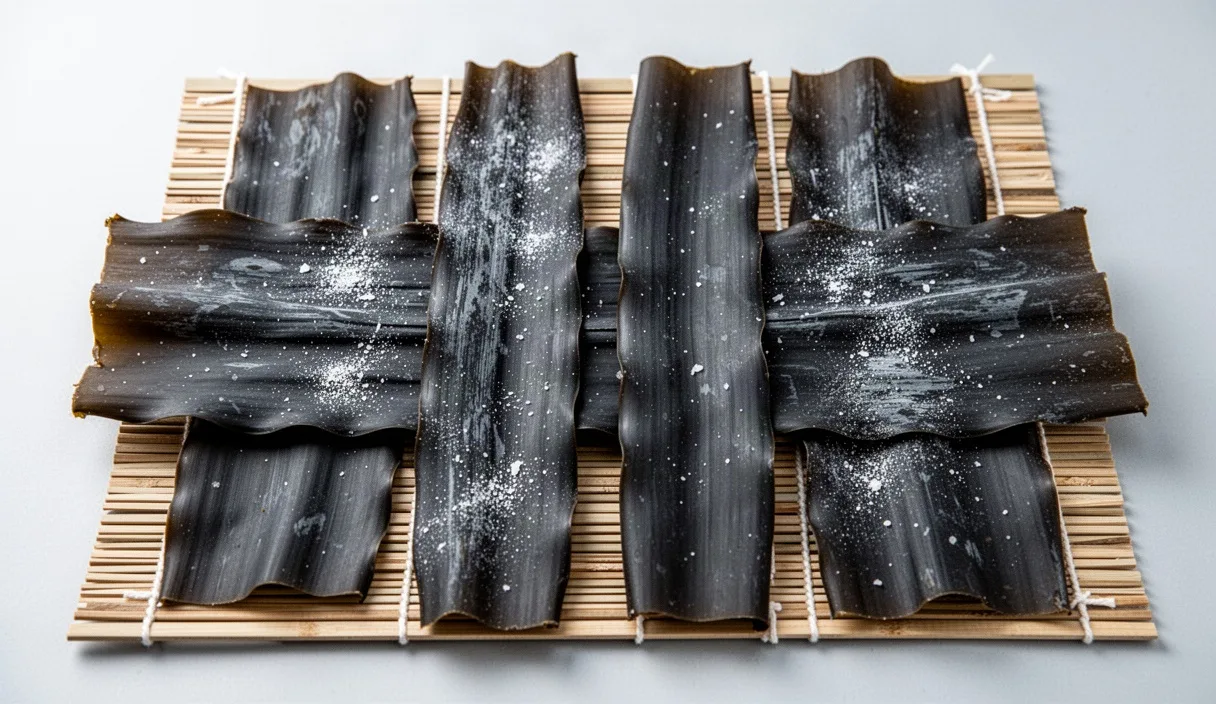
When the preparation involves robust proteins, such as fatty brisket, pork shoulder, wild mushrooms, or zucchini, doenjang should be selected. Add 20 to 25 grams of doenjang per 200 milliliters of anchovy-kelp stock at the start of cooking, allowing the paste to simmer alongside diced aromatics and tubers. The persistent heat extracts collagen from the meat and permits the paste to fuse with root starches, producing a restorative broth with structural depth.
Formulating Meat and Vegetable Marinades
For surface glazing and rapid broiling, red miso provides superior caramelization. The application of heat produces a golden crust due to the paste's sugar content. A standard glaze can be structured through the following preparation:
- Measure 60 grams of red miso into a non-reactive ceramic bowl.
- Incorporate 30 milliliters of dry sake and 25 milliliters of mirin, whisking until the mixture forms a smooth, brushable emulsion.
- Add 5 grams of finely grated ginger, stirring continuously to disperse the fibers.
- Brush the emulsion over dense fish, such as black cod, or sliced eggplant, and broil beneath high radiant heat for six to eight minutes.
For slow-cooked braises or curing dense cuts of red meat, doenjang is far more effective. Its higher protease concentration tenderizes tough muscle fibers, while its earthy profile cuts through heavy animal fats. Combine 50 grams of doenjang with 15 milliliters of dark sesame oil, two minced garlic cloves, and 10 milliliters of toasted perilla oil. Rub this paste into short ribs or pork belly prior to gentle, moist-heat braising over three hours.
Common Mistakes
The most frequent error in Western kitchens is the direct substitution of doenjang for red miso in quick dashi preparations. Because doenjang contains unsoftened bacterial volatiles and visible particulate fragments, stirring it raw into warm dashi produces an acrid, gritty broth that lacks the rounded sweetness characteristic of classic miso soup.
A second common mistake involves boiling red miso vigorously alongside root vegetables. Doing so strips the miso of its aromatic top notes, leaving behind an unpleasantly flat, salty liquor with separated curds floating on top. If a recipe requires sustained simmering of vegetables, cook them in a seasoned stock first, then whisk in the red miso during the final minute of cooking.
Lastly, cooks often fail to account for doenjang's pronounced salinity. Using doenjang in quantities calibrated for commercial miso recipes will routinely over-salt the dish, while depriving it of the necessary balance of sweet or acidic counterpoints. Always reduce the initial weight of paste by roughly twenty percent when working with doenjang in recipes originally written for red miso, adjusting upward only after the prolonged simmer is complete.
Practical Next Steps for the Cook
To integrate both pastes into your repertoire with confidence, begin with a direct comparison tasting. Measure 10 grams of artisanal doenjang and 10 grams of aged red miso into separate bowls. Dilute each with 100 milliliters of water heated to 80 degrees Celsius. Taste them side by side, paying specific attention to mouthfeel, salinity, and aromatic finish.
Following this sensory calibration, introduce each paste to its ideal cooking method. Prepare an unboiled soup of red miso, young scallions, and wakame to observe the delicate nature of fungal fermentation. In parallel, construct a slow-simmered stew using doenjang, dried anchovies, summer squash, and garlic, allowing it to bubble for twenty minutes. Note how prolonged heat harmonizes the doenjang, transforming its raw sharpness into deep savoriness.
When purchasing, inspect product labels carefully. Seek out doenjang whose ingredient panel lists only soybeans, water, and salt; avoid containers that include wheat flour, monosodium glutamate, or commercial alcohol, which indicate industrial short-cuts. Similarly, select red miso produced through traditional cedar vat fermentation without added synthetic preservatives. Should you wish to ferment your own pastes at home, consult a local agricultural extension specialist or food safety authority to ensure proper inoculation conditions and salt ratios, as uncontrolled ambient bean fermentations carry risks if microbial parameters are not scrupulously maintained.