 Terroir & Table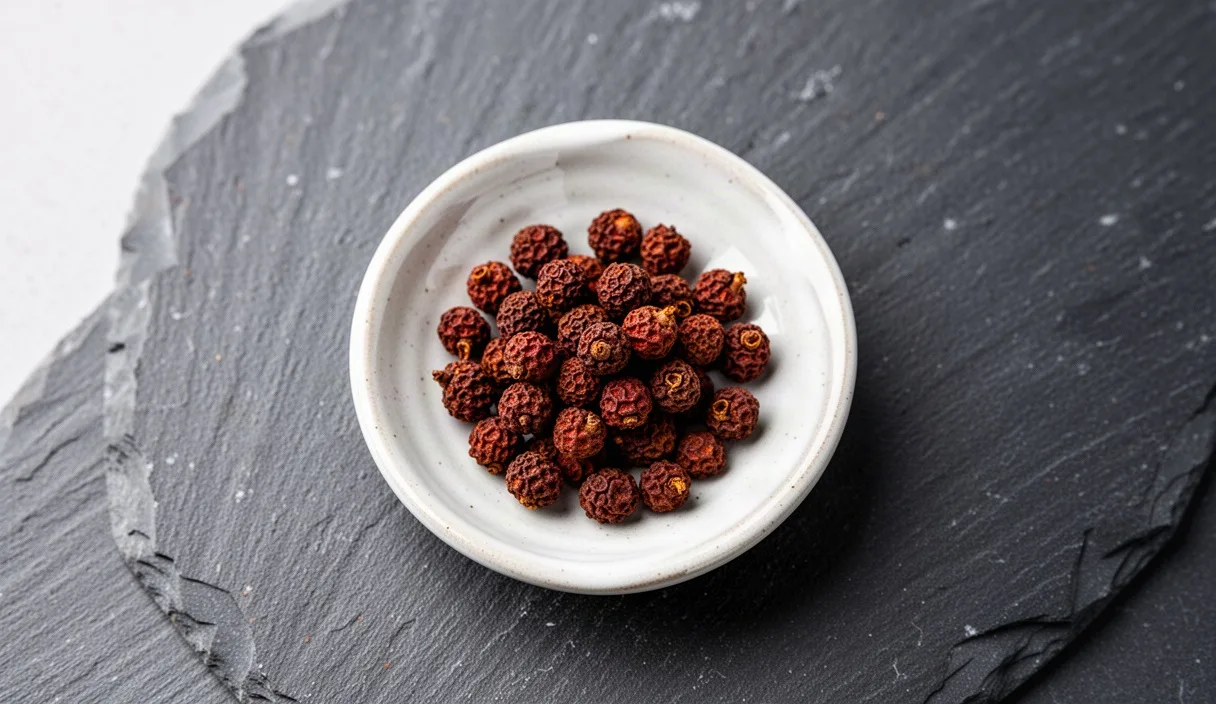

Few pantry staples possess the transformative sensory character of the dried berry known in Chinese culinary traditions as hua jiao, or flower pepper. While commonly designated as Szechuan peppercorn in Western markets, this seasoning is neither a true pepper nor a berry in the botanical sense. It represents, instead, the dried outer husk of a citrus relative native to the mountainous terrain of western China. When procured with care and conditioned through traditional dry-toasting and sifting methods, it imparts an unmistakable combination of bright citrus perfume and a vibrating, prickling numbness upon the tongue.
For the discerning cook, working with raw whole husks rather than pre-ground powder is not merely a preference but a prerequisite for quality. The volatile oils and alkamides that give the spice its distinctive profile deteriorate rapidly once the outer capsule is fractured and exposed to atmospheric moisture. By mastering the sequence of inspection, cleaning, dry-curing, and milling described in this guide, you will be able to preserve the volatile integrity of the harvest and prepare a spice blend that performs reliably in regional Chinese preparations, compound butters, and delicate meat support.
Botanical Anatomy of Hua Jiao
To evaluate and handle this spice properly, one must first understand its place within plant biology. Szechuan peppercorns belong to the genus Zanthoxylum, a branch of the Rue or citrus family (Rutaceae). Unlike black pepper (Piper nigrum) or chili peppers (Capsicum annuum), the edible and prized portion of Zanthoxylum is strictly the pericarp, the cleft outer capsule that surrounds a central seed. The botanical relationship to citrus is directly perceptible in the primary aromatics of the husk, which contain high concentrations of limonene, linalool, and geraniol.
The characteristic tingling sensation associated with the spice is caused by hydroxy-alpha-sanshool, a bioactive alkylamide. Rather than activating the heat receptors associated with capsaicin, sanshool stimulates tactile mechanoreceptors on the lips and tongue. This biological reaction produces a tingling sensation at a frequency near fifty hertz, a phenomenon termed ma in Mandarin, which forms the necessary counterweight to the piquant heat (la) of dried chilies. Two primary varieties appear in international markets, each distinguished by its chemical profile and geographical origins:
| Variety | Botanical Classification | Primary Scent Characteristics | Culinary Function |
|---|---|---|---|
| Red Peppercorn (Da Hong Pao / Hanyuan) | Zanthoxylum bungeanum | Warm pine, wood shavings, dried citrus rind | Braised meats, chili oils, master stocks |
| Green Peppercorn (Teng Jiao / Qing Hua Jiao) | Zanthoxylum armatum | Fresh lemon verbena, camphor, herbal floral notes | Cold appetizers, fish broths, dressed vegetables |
Within the commercial market, lower grades often include a high proportion of stalks, leaf fragments, and intact glossy seeds. The pericarp alone carries the essential oils and sanshool molecules. The glossy black seed inside is devoid of active flavor compounds and possesses a hard, vitreous interior that behaves like coarse gravel when crushed. An understanding of this anatomy dictates that any curing process must begin with absolute separation of husk from seed.
Indicators of Freshness and Potency
Sourcing exceptional hua jiao requires attentive visual and aromatic evaluation, particularly because packaged goods imported through specialty retailers may linger on inventory shelves for months. Freshly dried peppercorns should present vibrant coloration. Red varieties should range from deep copper to rich brick-red; pale, dust-grey, or uniformly brown hulls indicate prolonged oxidation or heat damage during field drying. Green varieties must show an olive or celadon hue rather than a muted khaki tone.
Aroma provides the most dependable gauge of vitality. Upon opening a sealed container, the fragrance should be immediate, sharp, and unmistakably resinous, recalling cedar shavings, bergamot, and coriander seed. If the sample smells weakly of dry cardboard or faint hay, the volatile monoterpenes have already evaporated. A simple physical assay involves crushing a single husk between your thumb and forefinger: the husk should yield with a crisp snap rather than compressing like leather, and an oily sheen should appear on the skin.
To verify the concentration of sanshool before committing to a larger purchase, place a single clean husk on the tip of the tongue. Chew it gently for three seconds, then discard it. Within thirty seconds, a clean, prickling sensation accompanied by mild salivation should spread across the mucosal tissues, persisting for several minutes. If the sensation produces only a dull astringency or a soapy residue without this vibrational numbness, the lot lacks the potency required for fine cookery.
Removing the Inedible Black Seed
Commercial harvesting methods in Sichuan, Shaanxi, and Gansu involve drying the clusters on mats or in warm convection sheds until the mature pericarps split open, allowing the black seeds to drop away. Nevertheless, commercial grades invariably retain between five and twenty percent residual seeds, alongside stiff pedicels (the small connecting stems). Prior to applying heat, these unwanted components must be methodically discarded.
The presence of even a modest quantity of black seeds will spoil the texture of finished sauces and ground spice mixtures. When ground, the seeds break into sharp, gritty shards that do not soften during cooking. Furthermore, the seed interior contains bitter tannins that obscure the clean citrus qualities of the husk. To prepare a batch of eighty to one hundred grams for curing, proceed with the following sorting steps:
- Scatter the raw husks across a broad, light-colored rimmed baking sheet in a single, uncluttered layer.
- Gently shake the tray with a lateral motion; the heavier, spherical black seeds will naturally roll toward the lower rim while the lighter, cup-shaped pericarps remain stationary.
- Using kitchen tweezers or clean fingers, lift away and discard all loose seeds, woody stems, and leaf fragments.
- Inspect the inside of the remaining pericarps to confirm that no small seeds remain trapped within the cleft of the two halves, plucking free any stubborn seeds that did not separate during threshing.
Expect a typical yield loss of roughly twelve to eighteen percent of the initial weight following a thorough sort. While this manual task requires patience, it marks the exact distinction between professional preparation and careless assembly. The resulting pile of sorted hulls should consist solely of hollow, crescent-shaped shells.
The Gentle Pan-Toasting Method
Raw pericarps contain ambient moisture absorbed during transport, alongside bound volatile oils that require mild thermal stimulation to unlock their aromatic breadth. Dry-toasting, known in Chinese kitchens as chao hua jiao, drives off residual dampness, makes the brittle cell walls easier to pulverize, and mellows the raw, acrid sharpness of the spice. This process must be conducted with restraint; excessive heat scorches the fragile essential oils, converting sweet citrus notes into bitter soot.
Select a heavy-bottomed cast iron skillet or a traditional carbon steel wok, both of which distribute thermal energy evenly without localized hot spots. Do not use non-stick cookware, as it cannot develop the dry, radiant environment necessary for even curing. Set the vessel over a gentle flame, allowing the metal to warm until the surface register stands between one hundred five and one hundred twenty degrees Celsius (approximately two hundred twenty to two hundred fifty degrees Fahrenheit).
Add the cleaned husks to the dry skillet without any oil or water. Keep the contents moving continuously using an untreated wooden spatula or regular sweeping motions of the pan. Within sixty to ninety seconds, the aroma will intensify, filling the room with warm cedar, citrus peel, and lavender notes. Observe the color closely: the interior face of the husks will lighten slightly to a pale buff tone, while the outer shell should show no dark or charred margins.
After three to five minutes of constant movement, a single husk pressed with a flat utensil against the pan bottom should shatter crisply into three or four pieces rather than bending. At this exact juncture, tip the peppercorns immediately onto a cold ceramic plate or a wire rack lined with unbleached parchment paper. Never allow the husks to rest in the hot pan off the heat, as the residual thermal mass of the iron will burn the delicate oils within thirty seconds.
Grinding and Sifting for Texture
Allow the toasted husks to cool completely to room temperature before attempting to grind them, which typically requires fifteen to twenty minutes. Attempting to grind warm peppercorns causes the lingering steam to bind with the released oils, creating an undesirable gummy paste rather than a clear, free-flowing powder. Once thoroughly cool, the cook must decide whether to use a manual stone mortar or a mechanical blade appliance.
For small quantities meant for table condiments, a heavy granite mortar and pestle offers superior control. Grind the husks using firm, circular pressure against the walls of the mortar rather than striking downward. For larger culinary batches, a clean electric burr grinder or dedicated blade spice grinder operates with greater speed. When using an electric grinder, run the motor in short pulses of two to three seconds to prevent the heat of friction from degrading the volatile aromatics.
A truly refined spice mixture must undergo sifting to separate distinct particle grades suitable for different kitchen tasks. Pass the crushed material through a fine stainless-steel mesh sieve (approximately thirty to forty mesh). Two distinct fractions will result from this procedure:
- Fine Powder (The Pass): The velvet-smooth dust that passes through the mesh. This portion should be reserved for finishing dishes immediately before service, such as Ma Po Tofu, dry rubs for roast duck, or inclusion in delicate table salts.
- Coarse Flakes (The Residue): The slightly larger, resilient hull fragments that do not pass through the screen. These coarser flakes are ideally suited for infusion into simmering chili oils, court bouillons, and braising liquids, where their flavor can extract over thirty minutes without clouding the sauce.
Proper Storage in Airtight Glass
The compounds responsible for the sensory attributes of Zanthoxylum are particularly sensitive to environmental degradation. Limonene oxidizes readily in the presence of ambient air, while sanshool molecules break down when exposed to ultraviolet radiation and ambient heat above twenty-five degrees Celsius. Consequently, casual storage in thin plastic bags or open spice racks will render a fine lot of peppercorns inert within a few weeks.
Glass vessels fitted with airtight mechanical clamps and rubber gaskets, or jars with tight threaded lids, represent the gold standard for long-term storage. Amber, cobalt, or dark violet miron glass is strongly preferred over clear flint glass, as tinted materials filter out actinic rays that initiate photo-oxidation. If only clear glass is available, store the vessels inside a fully enclosed, cool cupboard well away from ovens, ranges, or heating ducts.
Whole cured husks preserved in this manner maintain their potency for six to nine months, whereas finely ground powders begin to lose their vibrant top notes within thirty to forty-five days. For this reason, professional practice dictates curing husks in monthly allotments, keeping them whole until the moment of preparation, and grinding only the quantity needed for two or three days of service. Freezing whole toasted husks in heavy glass jars is acceptable, provided the jar is allowed to warm completely to room temperature before opening to avoid condensation forming on the cold interior surfaces.
Common Mistakes to Avoid
Even experienced practitioners occasionally encounter difficulties when handling Chinese aromatics. The following errors occur frequently and can be prevented through attentive technique:
- Toasting Over High Flame: Applying aggressive heat scorches the outer pericarps within seconds, destroying the floral nuances and replacing the clean numbing quality with an acrid, bitter smoke.
- Grinding Prior to Toasted Curing: Toasting raw powder instead of whole husks inevitably burns the material due to the tiny particle size and high surface-area ratio. Always toast first, cool, and grind second.
- Retaining the Black Seeds: Skipping the sorting process allows gritty, bitter seeds into the finished dish, causing an unpleasant texture and muddying the bright citrus flavor profile.
- Storing in Soft Plastics: Standard polyethylene bags allow oxygen and volatile oils to migrate across the plastic barrier, dulling the unique tingling sensation of the spice over time.
- Condensation in the Grinder: Milling husks while they retain heat from the pan traps moisture in the container, accelerating spoilage and dulling the crisp texture of the finished powder.
Practical Next Steps
To begin conditioning Szechuan peppercorns in your own kitchen, procure whole, unsifted husks from a vendor that demonstrates high product turnover and lists harvest dates. Sourcing red varieties from Hanyuan or green varieties from Jinyang provides an excellent benchmark for proper botanical character. Begin by sorting a modest sample of thirty to fifty grams to familiarize yourself with the structural separation of husk and seed.
Once you have cured and ground your initial allotment, introduce it directly into foundational preparations. A blend of three parts sea salt to one part freshly ground cured pepper provides jiao yan (pepper salt), an exceptional dry dip for roasted poultry and battered seafood. As your palate grows accustomed to evaluating the balance between floral top notes and the tingling sensation of sanshool, you will be able to calibrate toasting temperatures and milling textures to suit any culinary tradition.