 Terroir & Table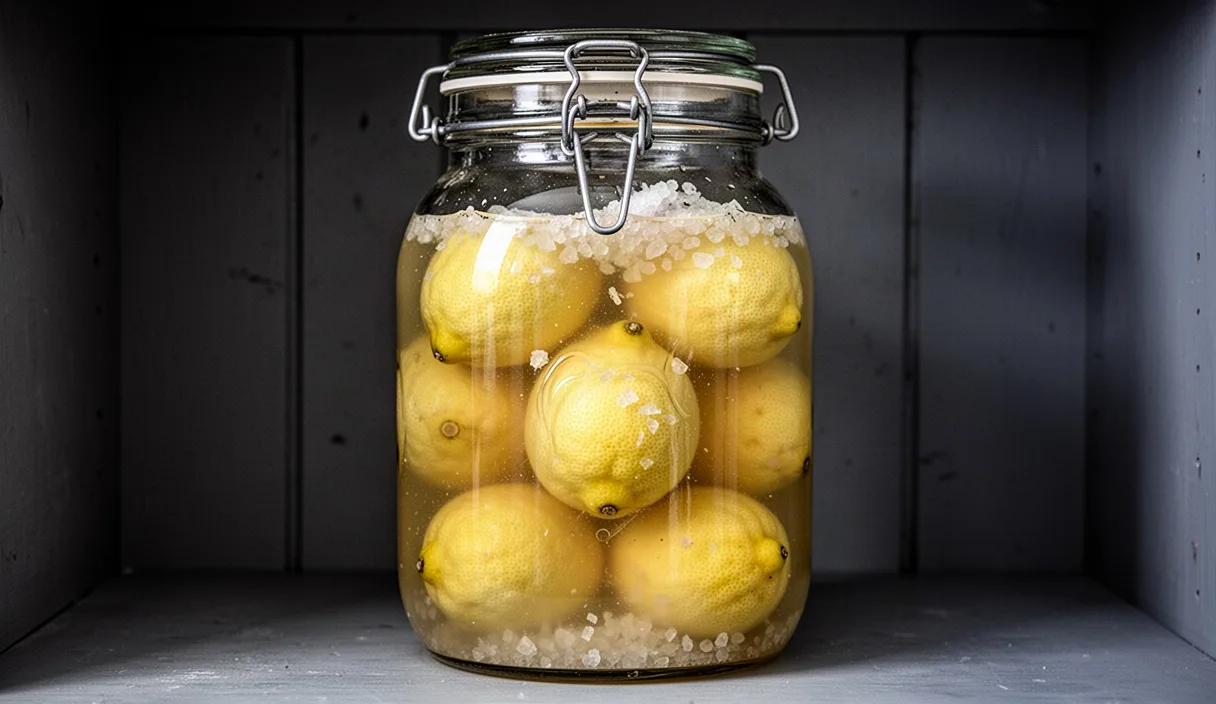

In the traditional larders of North Africa and the Levant, few preparations command as much quiet authority as the preserved lemon. Known in Morocco as l'hamd marakad, this staple transforms a volatile, fiercely acidic fresh fruit into a deeply savory, aromatic seasoning with a silky, tender peel. The transformation relies not on heat or added vinegar, but on the disciplined application of dry sodium chloride, the fruit's own expressed juices, and an anaerobic environment sustained over several weeks.
To view the curing of citrus merely as a method of shelf-life extension is to overlook the intricate biochemical changes taking place within the jar. Salt does not merely arrest spoilage; it draws out water through osmosis, ruptures cell walls, moderates enzymatic activity, and creates a selective habitat wherein acid-tolerant halophiles and lactic acid bacteria can mature the fruit safely. Understanding the interplay between citrus anatomy, precise salinity, and oxygen exclusion allows the cook to achieve consistent, clean fermentations free from mold or off-flavors.
Citrus Anatomy: Rind, Pith, and Essential Oils
A culinary appreciation of preserved citrus begins with its physical structure. Botanically classed as a hesperidium, the lemon possesses three distinct structural layers, each responding differently to curing:
- The Flavedo (Exocarp): The thin, colored outer skin containing thousands of microscopic oil glands. These glands hold volatile aromatic hydrocarbons, principally d-limonene, accompanied by citral, beta-pinene, and terpinene. In fresh fruit, these oils can taste sharp and solvent-like; under long salt curing, the hydrocarbons oxidize mildly into rounder, floral compounds reminiscent of bergamot and dried apricot.
- The Albedo (Mesocarp): The spongy white layer immediately beneath the colored skin. Rich in structural pectin, cellulose, and bitter flavonoids such as neohesperidin and naringin, the raw albedo is notoriously astringent. Exposure to brine gradually solubilizes this pectin network, softening the fibrous texture until it yields under gentle knife pressure, while the bitterness fades through slow enzymatic hydrolysis.
- The Endocarp (Pulp and Juice Sacs): Divided into segments by fibrous septa, the pulp contains juice vesicles suspended at a low pH, typically between 2.2 and 2.6, driven by high concentrations of citric acid. During preservation, the acidic juice serves as the natural liquid base of the brine, but the pulp itself becomes salted and flaccid, yielding its water to the surrounding solution.
Because the flavedo collects agricultural treatments, untreated, unwaxed fruit is essential. Conventional grocery fruit often carries a synthetic coating composed of shellac or oxidized polyethylene, applied to impede moisture loss during transit. Such coatings create an artificial barrier that resists salt absorption and impairs the delicate infusion of oil into the brine. Selecting fruit grown without post-harvest waxes guarantees an unhindered exchange across the outer membrane.
Fruit selection also dictates the character of the finished rind. The standard Eureka and Lisbon varieties offer thick rinds with substantial albedo, ideal for long stews where the peel must hold its shape. The Moroccan Beldi lemon, small and thin-skinned with a distinct floral perfume, support rapidly and produces a delicate, jam-like peel. Meyer lemons, a natural hybrid of lemon and mandarin orange, possess a thinner rind with naturally lower acidity; consequently, they require strict adherence to salt calculations to prevent softness from deteriorating into mush.
Calculating the Critical Salinity Threshold
In vegetable lacto-fermentation, practitioners frequently work with salt concentrations between 2% and 3% of the total vegetable mass. Citrus, however, demands a markedly different approach. Because lemons are naturally packed with moisture and sit at an exceptionally low pH, the microbial pressures differ from those encountered with cabbage or cucumbers. While pathogenic bacteria cannot thrive in raw lemon juice due to its acidity, acid-tolerant molds, particularly species of Penicillium and Aspergillus, as well as aerobic yeasts, find the acidic surface hospitable if oxygen and humidity are present.
To prevent fungal proliferation and ensure long-term stability without pasteurization, the preservation of whole or halved lemons requires a salinity threshold between 10% and 12% of the combined weight of the fruit and any supplemental juice. Salt added below an 8% threshold increases the likelihood of fungal contamination across the surface liquid, while concentrations above 15% halt desirable enzymatic softening entirely, leaving the albedo leathery.
| Fruit Mass (Grams) | Required Salt at 10% (Grams) | Required Salt at 12% (Grams) | Target Finished Volume |
|---|---|---|---|
| 500 g (approx. 4 lemons) | 50 g | 60 g | 0.75 Liter Jar |
| 1000 g (approx. 8 lemons) | 100 g | 120 g | 1.5 Liter Jar |
| 1500 g (approx. 12 lemons) | 150 g | 180 g | 2.0 Liter Jar |
A digital scale provides the only dependable means of preparing this cure. Measuring salt by volume, such as tablespoons or cups, introduces substantial error. A tablespoon of fine sea salt weighs roughly 18 grams, whereas the same spoon filled with coarse kosher salt may register as low as 10 grams due to larger air gaps between crystals. For this work, non-iodized sea salt or pure pickling salt is ideal. Additives like sodium ferrocyanide (used as an anti-caking agent) or potassium iodate can discolour the brine and impart a faint chemical bitterness to the porous pith.
The Submersion Protocol: Excluding Oxygen
The cardinal rule of citrus preservation is absolute submersion. Mold spores are strictly aerobic; they cannot proliferate in the absence of free oxygen. When a piece of rind bobs above the liquid line, even in a heavy brine, mold can take root on the exposed tissue. The preparation protocol must therefore prioritize continuous compaction and air displacement.
Begin by scrubbing each fruit thoroughly in warm water using a stiff vegetable brush to clear any loose dust or natural orchard residues. Dry the skins with clean linen towels. With a sharp chef's knife, trim away a paper-thin slice from the stem end to eliminate the dark calyx, which can harbor soil-borne microbes. Cut each lemon lengthwise from the tip toward the stem, stopping roughly one centimeter short of the base, so the quarters remain joined at the stem end. Make a perpendicular cut in the same manner, leaving four quarters tethered together.
Holding the cut lemon over a broad stainless steel bowl to catch escaping juices, open the quarters carefully and pack the interior cavity with a portion of the pre-weighed salt. Close the fruit firmly, pressing the quarters together to distribute the salt throughout the inner membranes, then place it directly into a sterilized glass preserving jar. Repeat this action with each fruit, arranging them tightly inside the vessel.
Using a wooden muddler, a clean tamper, or a gloved hand, press down on the lemons with deliberate force. This pressure accomplishes two goals: it expels air pockets trapped between the rounded shapes of the fruit, and it ruptures the internal juice sacs, drawing the acidic liquid up around the rinds. By the time the final lemon is placed, the expressed juice should rise to cover the pack entirely. If the natural juice proves insufficient to submerge the fruit fully, squeeze supplemental, freshly strained lemon juice into the jar until the liquid rests at least two centimeters above the fruit. Never add water; diluting the citric acid weakens the natural barrier against contaminants.
To maintain submersion, apply an inert mechanical weight, such as a glass fermentation disc, directly on top of the fruit pack. Avoid metal springs or reactive weights, as lemon juice corrodes steel and copper readily. Seal the jar with an airtight rubber-gasket lid or a two-piece canning band. For the initial seven days, invert the jar gently once daily to distribute the settling salt crystals until they dissolve entirely into a heavy, clear suspension.
Biochemical Shifts During the Four-Week Cure
A freshly packed jar undergoes a slow, fascinating metamorphosis over a four-week period held at moderate room temperatures (18 to 22 degrees Celsius). The transformation can be observed across regular intervals as physical and chemical forces alter the tissues.
Days 1 to 7: Osmotic Shock and Cell Plasmolysis. In the initial week, the hypertonic environment created by the high salt concentration pulls intracellular water across the semipermeable cell membranes of the lemon tissue. The fruit noticeably compacts and settles within the jar. The liquid turns cloudy as soluble sugars, citric acid, and suspended particles migrate into the brine. The essential oils in the flavedo begin to leak microscopically into the liquid, forming a shimmering, iridescent surface ring.
Days 8 to 14: Pectin Depolymerization and Enzyme Activity. As osmotic equilibrium stabilizes, endogenous enzymes within the fruit, particularly pectin methylesterase, begin breaking down the complex structural carbohydrates of the albedo. The white, tough pith begins its transition from an opaque, chalky barrier to a translucent, gelatinous layer. Bitterness softens notably as flavonoids interact with salt ions and acidic juice, muting harsh phenolic tones.
Days 15 to 28: Esterification and Flavor Maturation. By the third and fourth weeks, subtle microbial activity, carried out by resilient, acid-tolerant lactic strains alongside slow chemical esterification, rounds out the sharp edges of the mixture. Citric acid and terpenes react slowly in this hyper-saline environment to generate secondary aroma compounds. The brine loses its thin, watery character and thickens slightly into a light, syrupy suspension, rich with dissolved pectin. The flavedo shifts from a bright, luminous yellow to a deep, burnished amber.
Separating Rind from Pulp for Traditional Tagines
In authentic Maghrebi cuisine, the lemon is valued almost exclusively for its peel. The culinary properties of the cured rind differ radically from those of the interior pulp, and each part demands separate handling during kitchen preparation.
The pulp, having released its moisture and absorbed high levels of sodium, becomes intensely salty, fibrous, and somewhat pasty. While modern Western adaptations occasionally call for pureeing the whole fruit, Moroccan tradition treats the pulp with restraint. When preparing classics such as Tagine de Poulet aux Olives et Citrons Confits (chicken tagine with green olives and preserved lemons) or rich fish marinades like chermoula, the preserved lemon is retrieved from the jar with clean, non-metallic tongs and parted on a cutting board.
- Separate the fruit into quarters along the original cuts.
- Take a quarter and slip a paring knife flat between the translucent albedo and the stringy interior flesh, cleanly shearing away the pulp.
- Evaluate the dish's seasoning needs: if a sharp citrus note is desired in a braising liquid, finely mince a small teaspoon of the salted pulp and stir it in early; otherwise, discard the pulp and excess seeds.
- Examine the remaining rind. If the recipe calls for raw garnish, such as over cold salads of roasted eggplant (zaalouk) or grated carrot, rinse the rind briefly under cold running water to remove surface salt crystals, then pat dry.
- Slice the rind into thin matchsticks (julienne) or dice it into precise cubes. The softened rind can now melt into sauces without leaving hard, chewy fragments behind.
Long-Term Cellar Storage Guidelines
Once the four-week curing cycle is complete, preserved lemons require little intervention, provided basic environmental standards are respected. A dedicated larder, root cellar, or dark pantry cupboard kept between 12 and 18 degrees Celsius offers the ideal setting for ongoing storage.
Direct exposure to sunlight must be avoided. Ultraviolet radiation degrades the delicate aromatic terpenes suspended in the oil glands, causing the fragrant flavedo to turn dull, brown, and stale over time. Jars kept in clear glass must be shaded inside closed cabinets or wrapped in brown paper if open shelving is used.
Refrigeration is not mandatory for a properly salted, fully submerged batch, though it does slow down further softening. In warmer households where temperatures regularly exceed 24 degrees Celsius, placing the jar in the refrigerator after the initial four-week cure helps preserve a firm, pleasant texture in the peel over the course of a year. Always ensure that the remaining lemons remain submerged under the brine surface after removing portions for cooking; any lemon protruding above the liquid will deteriorate rapidly. Should the brine level fall low, top it up with a small measure of fresh, salted lemon juice (10 grams of salt dissolved into 100 grams of lemon juice).
Common Mistakes
Even seasoned cooks can encounter difficulties when preserving citrus. The following missteps occur most frequently and are entirely preventable:
- Diluting with Water: Adding tap or spring water to cover the lemons lowers both the salinity and the natural acidity, creating a hospitable environment for unwanted molds and souring bacteria. The only liquid in the jar should be pure lemon juice.
- Employing Corrosive Lids: Using untreated, exposed tin-plate or aluminum screw caps without a protective barrier invites trouble. The combination of salt and high citric acid will pit the metal within days, dropping dark, metallic oxides into the brine. Opt for glass-lidded jars with natural rubber gaskets, or line metal screw tops with parchment paper and plastic wrap.
- Neglecting Headspace: Overfilling the jar to the very rim leaves no space for the initial expansion of released gases and juice. Leave approximately two centimeters of headspace between the top of the brine and the lid.
- Using Soiled Utensils: Reaching into the preservation jar with bare fingers or spoons coated in culinary oils introduces wild yeasts and bacteria into the sterile, acidic environment. Always draw fruit out using clean, dry wooden or stainless-steel tongs.
Practical Next Steps
To begin your own cure, obtain one kilogram of fresh, heavy-bottomed lemons that are firm and free of soft spots or surface blemishes. Verify that they are unwaxed, or wash them diligently under warm water to clear the rind of commercial coatings.
Set a clean glass preserving jar, a digital kitchen scale, and 120 grams of pure, non-iodized sea salt on your workspace. Prepare the fruit by quartering them partially through the stem base, pack them firmly with the salt, and press them into the vessel until their own natural juices rise up to seal them off from the air. Set the sealed jar in a quiet, dark corner of your pantry, turning it gently once a day for the first week, and allow the quiet chemistry of salt and time to run its four-week course.